
How to Check for Thurston County Warrants
There is no public countywide warrant list for the county. The Sheriff's pages do not host a browse-all active warrant search. That means you cannot type a name into one box and see every open warrant. Instead, you verify through the court that issued the warrant or through the agency that made the arrest or wrote the report. A District Court warrant is checked with the District Court. A felony warrant is checked through the Superior Court and the Clerk.
A warrant can still surface another way. In a court case search, a warrant may appear as a docket event, like a bench warrant entry with a date. But the full warrant document can be sealed or restricted, so the index entry may be all the public sees. Treat that index line as a clue, not the whole story. Confirm it with the court of record before you act on it.
The steps below show the safe order to follow.
- Figure out which court likely issued the warrant: District Court for misdemeanors and infractions, Superior Court for felonies.
- Call the District Court at 360-786-5450 for a District Court matter, or contact the Superior Court Clerk for a felony case.
- Run a court case search to see if a warrant shows as a docket event, then note the cause number.
- Verify the status with the issuing court directly; do not rely on a phone call that came to you out of the blue.
- If you are represented or eligible, ask Public Defense about the warrant and your options.
Note: A docket entry may flag a warrant, but only the issuing court can confirm whether it is still active or already recalled.
Types of Warrants
Not every warrant means the same thing. The word covers several kinds of court orders, and each has its own cause and its own fix. Knowing which type you face helps you choose the right court and the right next step. Some warrants follow a missed hearing. Others follow a charge, a violation, or an active investigation.
These are the main warrant types that touch a county case.
- Arrest warrant - an order that authorizes an arrest, often issued after a finding of probable cause.
- Bench warrant - issued by a judge, usually for failure to appear, failure to comply, a probation violation, or contempt.
- Search warrant - authorizes officers to search a person or property for evidence, and is often sealed while the case is investigated.
- DOC secretary's warrant - a state corrections warrant tied to community supervision or custody.
- Protection-order or no-contact violation warrant - tied to enforcing a criminal no-contact order or a civil protection order.
A bench warrant is the one most people meet, since it often follows a missed court date rather than a new crime.
Warrant Search Tools and What They Show
Because no county warrant list exists, the search tools you can use are limited and partial. Each one shows a slice, not the full picture. A state corrections tool covers state supervision, not local court warrants. A court case search shows docket events but can hide the sealed warrant itself. The table sets out what each option actually returns so you do not expect more than it gives.
| Portal | Fields | Notes |
|---|---|---|
| Thurston County active warrant list | Not located | No official public countywide active warrant database was found in county sources. |
| Washington DOC warrant search | DOC number or name fields | State DOC supervision only, not local court warrants. |
| Court case search | Case number or party name | Warrants may appear as docket events, but full warrant details can be sealed or restricted. |
For state supervision matters, the Washington DOC warrant resources page is the right place to start.
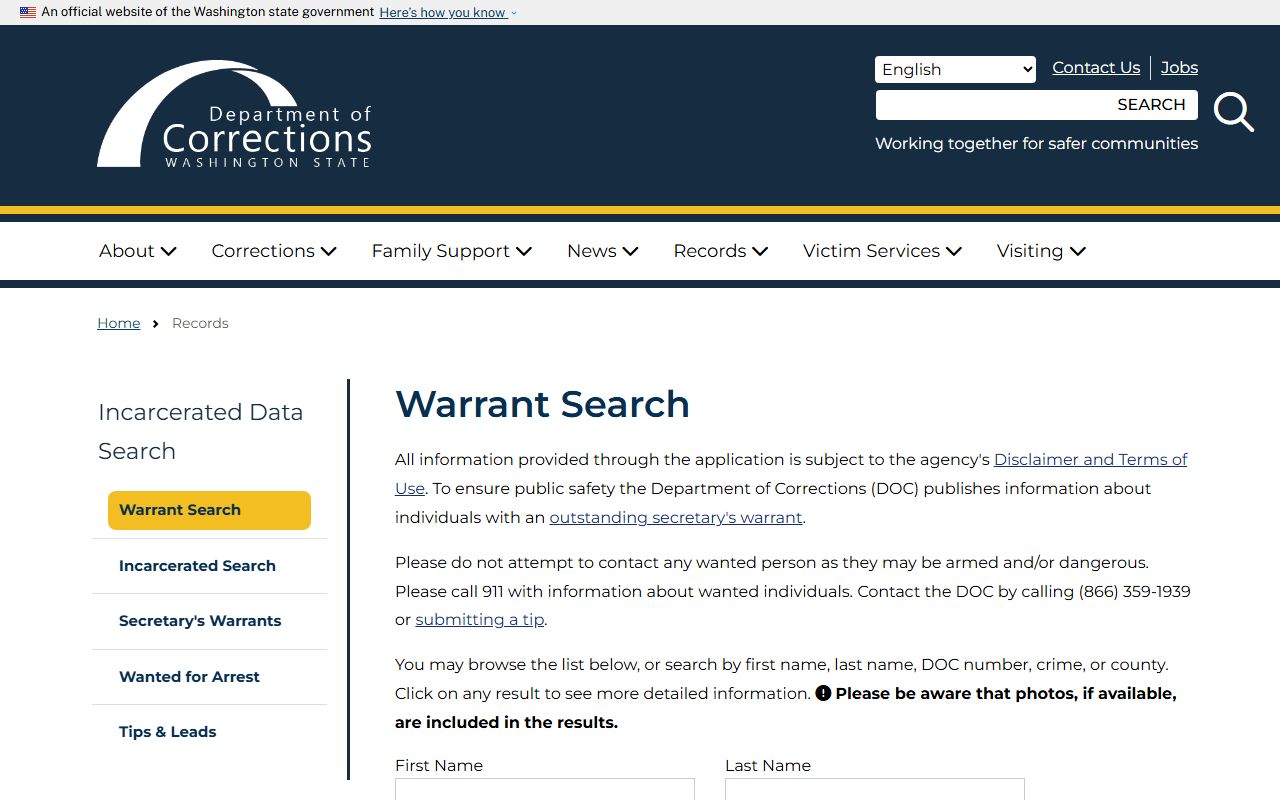
That DOC page handles state corrections warrants and wanted matters, so it will not show a local District Court bench warrant or a county search warrant.
What a Warrant Record Contains
No public county warrant record was available to inspect, so the fields below are the ones you would expect on a warrant if it were released. Treat them as the likely shape of a record, not a confirmed county sample. A warrant ties a person to a case, a court, and a charge or violation. It usually states whether bail is allowed and how much. The status field tells you if the warrant is still open.
| Field | What It Shows |
|---|---|
| Name | The person the warrant names. |
| Case Number | The cause number for the underlying case. |
| Issuing Court | District Court or Superior Court. |
| Warrant Type | Arrest, bench, search, or other order. |
| Issue Date | When the court signed the warrant. |
| Charge / Violation | The offense or the failure that led to the warrant. |
| Bail Amount / Bondability | The set bail and whether it can be bonded. |
| Status | Active, recalled, or served. |
| Agency | The law enforcement agency tied to the case. |
Note: These fields are expected, not verified, since the county does not post a public warrant record for the public to view.
How to Quash or Recall a Thurston County Warrant
A warrant does not clear itself. To quash or recall a Thurston County warrant, you have to deal with the court that issued it. The path splits by court level. A misdemeanor or infraction warrant runs through the District Court. A felony warrant runs through the Superior Court and the Clerk. Public Defense keeps a "How to Quash a Warrant" resource for people who qualify for appointed counsel.
The steps here outline the usual route.
- For a District Court warrant, contact the District Court at 360-786-5450, or reach Public Defense if you are represented or eligible.
- For a Superior Court felony warrant, contact the Clerk and the court, and work with your attorney, the Prosecutor, or Public Defense as needed.
- If the court advises you to appear, appear in court or follow your counsel's instruction.
- Bring ID, the case number, proof of compliance, and bail money if the court allows bail.
- After the matter is resolved, confirm the court updated the warrant and that the jail and law enforcement systems got the recall or quash notice.
Bail rules ride on the court order. If a warrant allows bail, you can post it. If it does not, appearing before the judge may be the only way to lift it.
Bail on a Warrant
When a warrant lets you post bail, where you pay depends on the time of day. The court sets the amount and the type. During business hours, bail should be posted at the District or Superior Court clerk's office at 2000 Lakeridge Drive SW. That is the first stop while the courthouse is open.
After hours and on weekends, the rule shifts. Bail may be accepted at the Corrections Facility Bail Window at 3491 Ferguson St SW in Tumwater. The jail takes cash. It does not take credit cards or personal checks, so plan ahead. Jail workload can cause long waits, and there is no quick line. The facility accepts bail on behalf of the charging court, but it does not set or change the amount.
Note: The jail does not accept credit cards or personal checks for bail, so bring cash and expect a possible wait.
Warrant and Payment Scams
Scammers use warrant fear to steal money, and the District Court has posted alerts about it. The con is simple. Someone calls, texts, or emails and says you have a warrant, and that you must pay right now to avoid arrest or jail. They may sound official and may even spoof a real number. Real courts and deputies do not work that way.
Important: A call, text, or email that demands immediate payment to avoid a warrant or jail is a scam. Sheriff's deputies do not collect fines or bail by phone. Do not pay, do not give card or gift-card numbers, and do not share personal data. Hang up and verify the claim directly with the court or the Sheriff's Office.
When in doubt, stop and check. Call the court using a number you looked up yourself, not one a caller gave you. The District Court can confirm whether a real warrant exists. Trust the court, not the threat on the line.
Sealing and Vacating After a Case
Once a case ends, some people want the record cleared. Washington does not use the word "expunction" the loose way some states do. Adult relief is usually vacation of a conviction. A felony vacation follows its own statute, and a misdemeanor vacation follows another. Each has its own eligibility test and waiting period, and a judge has to sign an order.
Felony relief runs through one section of state law. The text of RCW 9.94A.640 sets the rules for vacating a qualifying felony conviction.
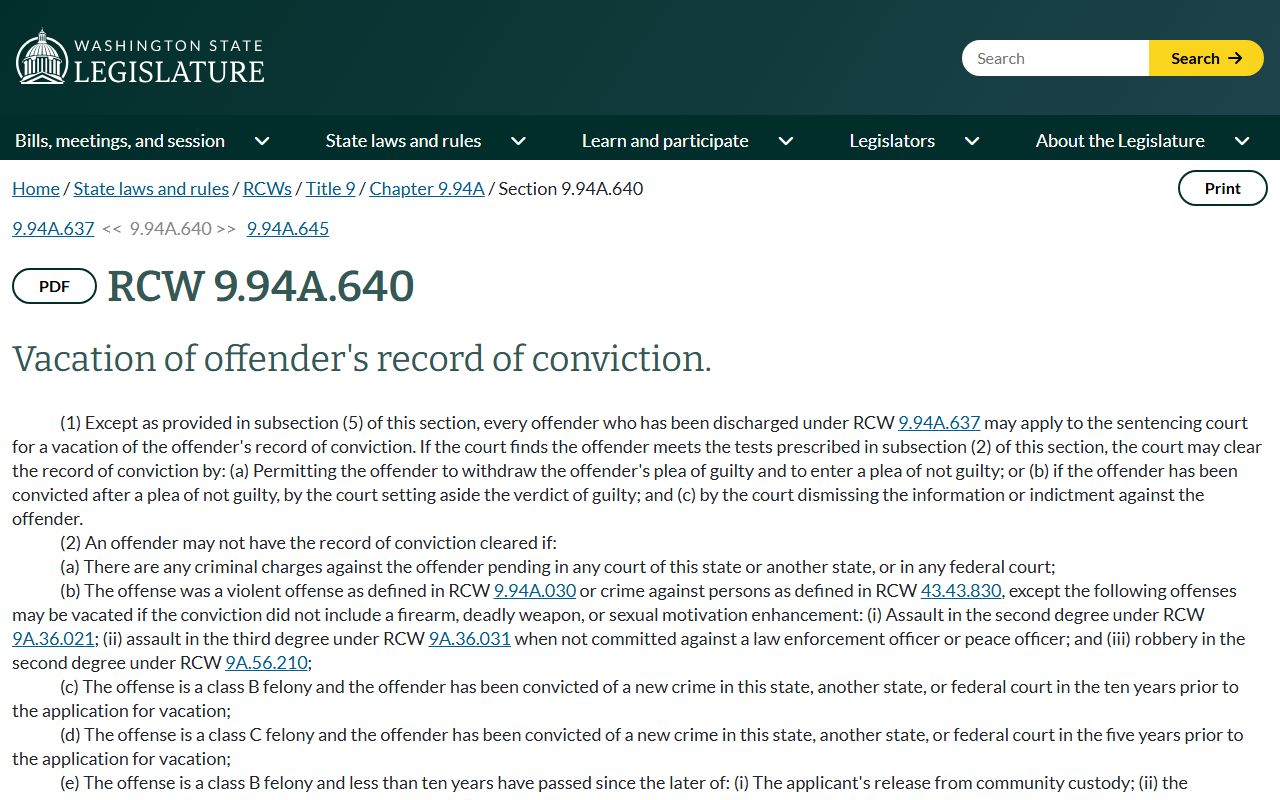
Vacating a felony can change how the conviction shows in court and criminal history records, though it does not erase every historical trace. Waiting periods and disqualifying offense types still apply.
Misdemeanor relief sits in a separate statute. The provisions of RCW 9.96.060 govern vacation of a misdemeanor or gross misdemeanor conviction, which often comes up after a District Court criminal case.
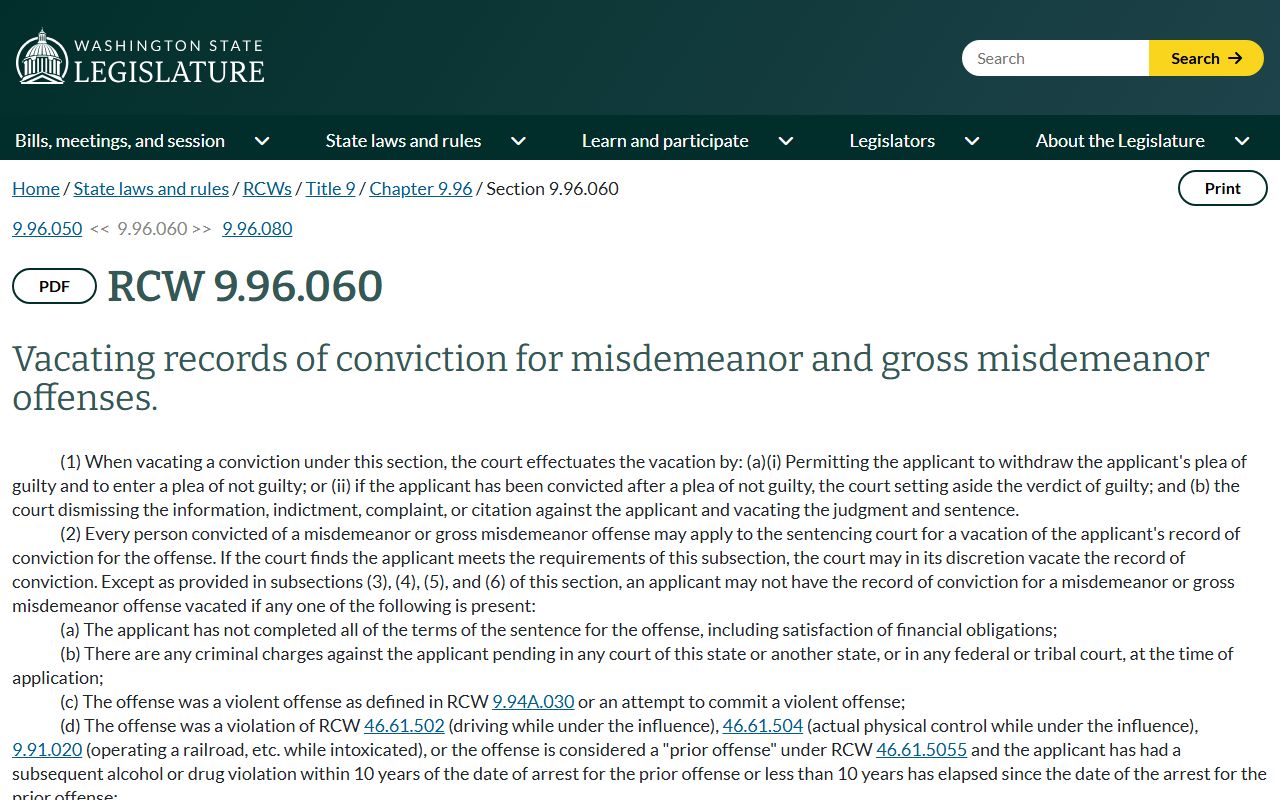
That statute lists who qualifies and which offenses are excluded, so it pays to read the exclusions before you file. New pending charges or unpaid obligations can block relief.
Criminal history data has its own privacy framework apart from court case files. The rules in RCW chapter 10.97 govern how criminal justice agencies collect, keep, and share criminal history record information.
That chapter is why a court case search is not the same as an official criminal history check, and why the two follow different access rules.
The Sex Offender Registry
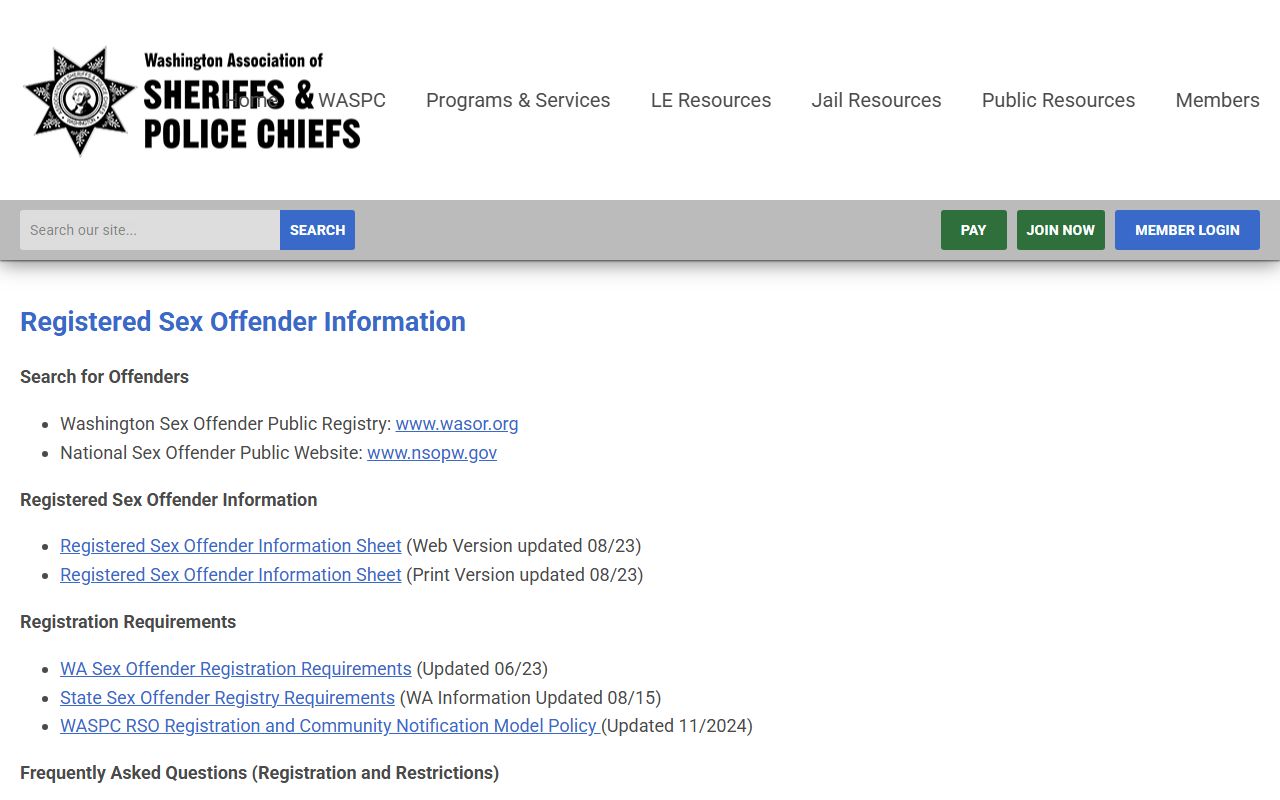
People who check for warrants often check the sex offender registry too. The two are not the same thing. A registry listing tells you about registration status, not about an open warrant or current custody. The state law enforcement association keeps the public registry resources for Washington.
The WASPC sex offender information page is the official starting point for registry data in the state.
Remember that a registry entry is not proof of current custody or of an active warrant. To confirm custody, check a jail roster; to confirm a warrant, go back to the issuing court.